
Customer Stories: How Interior Design Software Transforms Business Outcomes
Customer Stories: How Interior Design Software Transforms Business Outcomes
The landscape of real estate and interior design is undergoing a seismic shift, driven not by changing trends in furniture, but by the technological revolution occurring behind the scenes. For decades, the industry relied on physical staging, hand-drawn sketches, or complex CAD programs that required years of training to master. Today, we are witnessing a transformation where Artificial Intelligence (AI) and intuitive design software are democratizing visualization.
According to recent industry data, 97% of all homebuyers now use the internet in their home search, and listings with high-quality photos and virtual tours receive 87% more views than those without. However, statistics only tell half the story. The true power of this technology is best understood through the lens of those using it daily—the real estate agents closing deals on "unsellable" properties, the interior designers slashing their revision times, and the homeowners saving thousands by avoiding renovation mistakes.
This article delves deep into customer stories interior design software has created. We move beyond the feature lists to explore the tangible, real-world impact of these tools. Whether you are a business owner looking to scale, a realtor needing to lower days on market (DOM), or a creative looking to visualize the impossible, these narratives provide the blueprint for modern success.
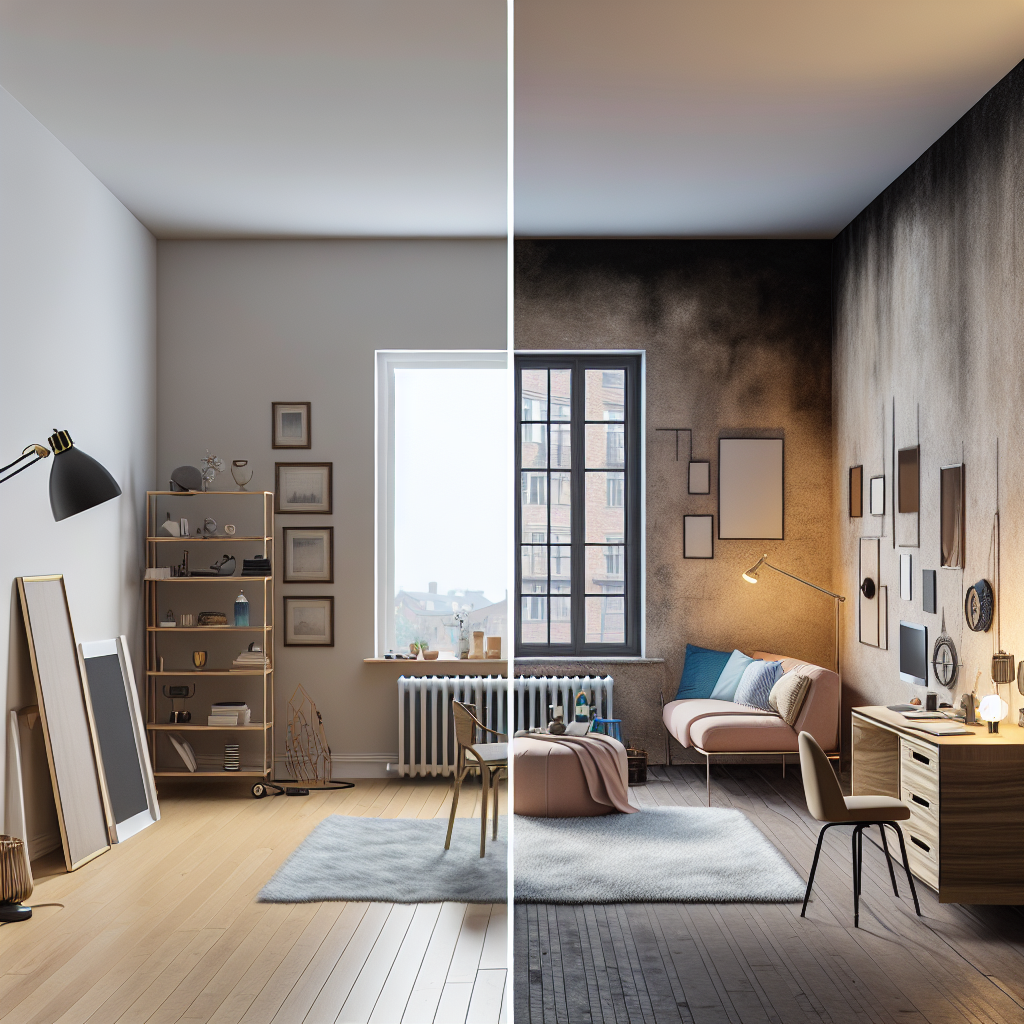
Beyond the Feature List: Why Real-World Application Matters
In the software world, marketing materials are often dominated by technical specifications: ray-tracing capabilities, polygon counts, and rendering speeds. While these metrics are important to software engineers, they rarely resonate with the end-user who is trying to solve a business problem. The gap between a feature list and a sold property is bridged by application—how the tool is actually used in the trenches of daily business.
The Disconnect Between Specs and Success
For a business owner, a software's value is not defined by what it can do, but by what it allows them to do. A complex rendering engine is useless if it takes four hours to produce a single image for a client who is waiting in the office. Customer stories reveal that the most celebrated "feature" of modern interior design software is often accessibility.
When we analyze user feedback and success stories, a pattern emerges: professionals are less concerned with "photorealism perfection" (though quality matters) and more concerned with "speed to visualization." The ability to produce a "good enough" or "great" image in 30 seconds is often more valuable than producing a "perfect" image in 30 hours. This shift prioritizes workflow efficiency over technical granularity, allowing businesses to serve more clients in less time.
From CAD Frustration to AI Flow
The traditional narrative of interior design software involved a steep learning curve. Architects and designers would spend weeks mastering tools like AutoCAD or Revit. While powerful, these tools created a bottleneck.
Consider the story of boutique design firms that previously had to outsource their 3D rendering to specialized artists. This process introduced lag time; if a client wanted to change a sofa color, it meant emailing the renderer, waiting 48 hours, and paying an additional fee.
With modern AI-driven interior design software, the narrative changes from frustration to flow. Users report a sense of liberation. They can upload a photo of a room and instantly apply different styles—Scandi, Industrial, Bohemian—in real-time. This immediacy transforms the client relationship from a transactional "wait-and-see" dynamic to a collaborative "co-creation" experience. The software becomes a facilitator of conversation rather than a barrier to entry.
The Real Estate Revolution: Selling the Empty Space
One of the most compelling areas for customer stories interior design software is in the realm of real estate sales, specifically regarding vacant properties. An empty room is not a blank canvas to most buyers; it is a cold, confusing space where they cannot judge scale or function.
The Vacant Property Challenge
Real estate agents frequently encounter the "imagination gap." When a potential buyer walks into an empty living room, they struggle to visualize where the television would go, if a king-sized bed fits in the master suite, or how the open-plan dining area functions. This uncertainty leads to hesitation, and hesitation kills deals.
Success stories in this sector often revolve around "stale" listings. These are properties that have sat on the market for 60, 90, or 120 days. The structure is sound, the price is right, but the emotional connection is missing. Agents who adopt virtual staging software tell a consistent story: once they uploaded virtually furnished images to the MLS (Multiple Listing Service), traffic increased immediately. The software allows them to inject warmth, lifestyle, and function into a void.
Virtual Staging vs. Physical Staging: A Cost Narrative
The economic narrative here is undeniable. Physical staging is effective but expensive and logistically heavy.
- Physical Staging: Requires renting furniture, paying movers, insurance, and monthly rental fees. It can cost anywhere from $2,000 to $10,000+ depending on the home size and market.
- Virtual Staging: Using AI software, an agent can stage an entire home for a fraction of the cost (often under $50 or included in a software subscription) in a matter of minutes.
The customer story here isn't just about saving money; it's about risk management. An agent selling a mid-range home may not have the budget for physical staging. Virtual staging allows them to present the home at its highest potential without the financial risk. If the style doesn't resonate, they can re-stage it digitally as "Modern Farmhouse" or "Mid-Century Modern" with a single click—something impossible with physical furniture.
Impact on Days on Market (DOM)
The ultimate metric for real estate success is Days on Market (DOM). The longer a house sits, the lower the final sale price tends to be.
Consider the case of a property in a competitive urban market that sat vacant for four months. Feedback from showings was consistent: "The bedrooms feel small." The square footage was adequate, but without a bed for reference, buyers couldn't verify it visually. The agent used interior design software to virtually place a Queen bed and nightstands in the photo.
The result? The perceived scale of the room changed instantly. The property received an offer within week of updating the listing photos. This is a recurring theme in customer stories: the software doesn't change the house; it changes the perception of the house, unlocking value that was previously invisible to the buyer.
Accelerating the Design Process: From Days to Minutes
For professional interior designers, time is the only non-renewable resource. The traditional design process involves concepting, mood boarding, drafting, rendering, and revising. The "revising" stage is notoriously where profit margins go to die.
Compressing the Concept Phase
Designers are using AI tools to radically shorten the "concepting" phase. In the past, a designer might spend days gathering fabric swatches and sketching layouts to present a single concept. If the client hated it, those days were wasted.
Now, designers share stories of "live concepting." They sit with a client, upload a photo of the client's current space, and generate five different aesthetic directions in ten minutes.
- Client: "I like the layout, but I hate the Industrial look. Can we try Coastal?"
- Designer: "Done."
This rapid iteration validates the direction before the designer invests hours in detailed sourcing and technical drawings. It ensures that when the deep work begins, it is moving in the right direction.
Managing Client Revisions Without Burnout
"Scope creep" and endless revisions are the primary complaints of creative professionals. A client might struggle to articulate what they want, leading to a game of trial and error that exhausts the designer.
Customer stories highlight how software acts as a "visual translator." Instead of the client using vague terms like "edgy but homey," the software visualizes those prompts. When a client sees the result, they can point and say, "I like that rug, but not those lamps." This precision eliminates rounds of revisions.
One interior design firm reported a 60% reduction in project turnaround time by implementing AI visualization at the start of the project. By getting the "vibe" approved instantly, they spent their billable hours on execution and sourcing rather than guessing the client's taste.
Using AI to Generate Mood Boards Instantly
Mood boards are the anchor of interior design, but manually assembling them in Photoshop is time-consuming. Modern software automates this. By analyzing the elements in a generated design, the software can pull out color palettes, textures, and furniture styles to create a cohesive board.
This capability allows designers to scale their business. A solo practitioner who could previously handle two major projects a month can now handle five, simply because the administrative burden of visualization has been lifted.
Bridging the Imagination Gap in Renovations
Homeowners looking to renovate face a daunting challenge: they are asked to spend tens of thousands of dollars based on a 2D floor plan or a verbal description. This "imagination gap" causes anxiety and often delays projects.
Visualizing the Unbuilt
Contractors and architects often struggle to communicate their vision to laypeople. A blueprint makes sense to a builder, but to a homeowner, it’s just lines on a page.
Customer stories in the renovation sector often feature the "Aha!" moment. A contractor proposes knocking down a wall to create an open-concept kitchen. The homeowner is hesitant, worried it will look messy. The contractor uses design software to visualize the view from the front door with the wall removed.
- The Result: The homeowner immediately understands the flow of light and space. The project gets the green light.
Financial Safety: Identifying Clashes Virtually
Perhaps the most valuable stories are those about money saved by avoiding mistakes.
- The Scenario: A homeowner wants dark navy cabinets and black flooring. In their head, it looks moody and sophisticated.
- The Simulation: They run this combination through design software.
- The Reality: The image reveals that the room looks like a cave—too dark and oppressive.
- The Pivot: They switch to lighter flooring before spending a dime on materials.
Identifying these design clashes virtually is free. Identifying them after installation costs thousands in rework. This "virtual trial run" is a major selling point for design-build firms using this software.
The Emotional Relief of Certainty
Renovation is stressful. It involves dust, noise, and large checks. The emotional component of customer stories cannot be overstated. Seeing the "after" picture before the demolition begins provides a psychological anchor for the homeowner. It gives them something to look forward to during the chaos of construction. This emotional reassurance builds trust between the client and the contractor, leading to smoother project management and fewer late-night panic calls.
Unleashing Creativity: When Standard Software Isn't Enough
While efficiency is key, interior design is ultimately a creative field. Standard software libraries often limit users to generic "catalog" furniture. AI-driven design software breaks these boundaries, allowing for wild creativity that engages audiences on social media.
Why Standard Software Fails at Niche Aesthetics
Traditional drag-and-drop software is limited by its 3D model library. If you want to design a "Gothic Victorian Gamer Room," and the software only has "Modern West Elm" assets, you are stuck.
AI software generates images based on text prompts and image inputs, meaning the library is infinite. Users can request "Art Deco meets Cyberpunk" or "70s conversation pit with a futuristic twist." This flexibility allows designers to service niche markets that were previously difficult to visualize.
Showcasing Fun Examples: The "Zombie Apocalypse" Room
One of the most engaging ways businesses use this software is for viral marketing. A real estate agency might take a listing that is in terrible condition—peeling paint, broken windows—and instead of hiding it, they lean into it.
- The Campaign: They use AI to stage the room as a "Zombie Apocalypse Safe House," complete with barricaded windows and survival gear.
- The Result: The listing goes viral on social media. People share it because it's funny and creative.
- The Benefit: While the buyer might not want a zombie bunker, the agency gets thousands of eyes on their brand. They then follow up with a "Renovated Modern" version of the same room to show the true potential.
How Unique Visualizations Engage Social Media Audiences
Instagram and Pinterest are visual-first platforms. Generic gray living rooms are a dime a dozen. Unique, hyper-creative visualizations stop the scroll.
Designers are using software to create "Dreamscapes"—impossible rooms with waterfalls, floating furniture, or forest floors. These images may not be for actual construction, but they build the designer's brand as a visionary. They attract followers, which converts to brand authority and eventually, paying clients who want a slice of that creativity (even if toned down).
💡 Additional resource: Search YouTube for "AI interior design creative prompts" for more tutorials.
The Metrics of Success: Quantifying the Impact
Stories are powerful, but businesses run on numbers. When we aggregate the customer stories regarding interior design software, distinct metrics of success appear.
Time Savings Analysis
The most immediate ROI is time.
- Rendering: Reduced from 4+ hours to <1 minute.
- Staging: Reduced from 3 days (logistics/moving) to 1 hour.
- Revisions: Reduced from weeks of back-and-forth to a single working session.
For a business billing by the project, this efficiency directly increases the hourly effective rate. For a business billing by the hour, it allows them to lower the barrier to entry for clients, capturing a larger segment of the market.
Increase in Property Sale Value
While difficult to pinpoint exact dollar amounts due to market fluctuations, the consensus among real estate professionals using high-end visualization is a value increase of 1% to 5%. On a $500,000 home, that is a $5,000 to $25,000 difference.
This increase comes from:
- Higher Traffic: Better photos = more showings.
- Emotional Connection: Staged homes feel "move-in ready."
- Potential Realization: Renovation visualizations show buyers that a "fixer-upper" is actually a "dream home."
Client Satisfaction Scores
Perhaps the most critical metric for long-term business health is the Net Promoter Score (NPS). Clients who feel heard and understood are more likely to refer friends.
The interactive nature of modern design software—where a client says "change it" and it changes instantly—makes clients feel involved. They feel like co-designers. This ownership over the final result leads to significantly higher satisfaction rates compared to the "black box" method where a designer disappears for weeks and returns with a final reveal.
Conclusion: Writing Your Own Success Story
The customer stories interior design software generates are not just about pretty pictures; they are about business transformation. From the real estate agent who sold a stagnant listing in a week by virtually staging a nursery, to the contractor who saved a client $5,000 by visualizing a flooring clash before installation, the evidence is clear.
We are moving away from an era where high-quality visualization was a luxury reserved for luxury projects. It is now a fundamental tool for communication, sales, and creative expression. The barrier to entry has crumbled. The learning curve has flattened. The only remaining variable is how quickly you choose to adopt these tools.
Whether you are looking to streamline your workflow, dazzle your clients, or simply sell properties faster, the technology is ready. The software doesn't replace the designer or the agent; it amplifies their ability to communicate value.
Key Takeaway: The gap between "what is" and "what could be" is where sales happen. Interior design software bridges this gap instantly. By integrating these tools into your workflow, you aren't just making images; you are building trust, saving time, and ultimately, closing more deals. The next success story in your industry could be yours—if you are willing to embrace the digital shift.
References
- National Association of Realtors - Real Estate in the Digital Age
- Forbes - How AI is Revolutionizing Interior Design
- Architectural Digest - The Future of Virtual Staging
Frequently Asked Questions
Why are customer stories important when choosing interior design software?
Customer stories and case studies go beyond marketing features to show how the software performs in real-world scenarios. They provide insight into how peer design firms have solved specific pain points, such as client communication bottlenecks or rendering delays, and offer proof of the software’s ability to deliver a return on investment (ROI).
What common benefits are frequently highlighted in interior design software success stories?
Most customer stories focus on three main advantages: improved visualization (high-quality 3D renders that help sell concepts), efficiency (automating floor plans, shopping lists, and mood boards), and client satisfaction (faster revision cycles and clearer communication).
Can I find customer stories relevant to my specific business niche (e.g., E-design vs. Kitchen & Bath)?
Yes. Most major software providers categorize their case studies by business type. whether you are a solo freelancer, a dedicated kitchen and bath remodeler, or a large architecture firm, you can usually find testimonials that address the unique workflow and technical requirements of your specific niche.
How can reading customer stories help me justify the cost of premium design software?
Case studies often include measurable data, such as "reduced project turnaround time by 30%" or "increased client approval rates by 50%." You can use these metrics to calculate potential time savings and revenue growth for your own business, helping to justify the subscription or license cost to stakeholders or for your own financial planning.
Tags
Related Articles

How to Visualize a Room Layout: A Comprehensive Guide for Business Owners
Learning how to visualize a room layout before you spend a single dollar on procurement is the ultimate risk management strategy for your physical assets.

Commercial Interior Design Software vs. Residential Tools: A Strategic Guide for Business Owners
Conversely, investing in high-end commercial interior design software for smaller, boutique residential projects can result in unnecessary overhead.

How to Sell Empty Homes Faster: The Ultimate Guide to AI Staging
In this comprehensive guide, we will explore exactly how to sell empty homes faster using the latest AI technology. Get expert insights and actionable tips.